Why Mixing Prints Actually Works Best Around One Shared Anchor Color
Mixing prints gets explained mostly through rules about pattern scale, pair a large print with a small one, but scale alone doesn’t explain why some mixed-print outfits look intentional and others look chaotic, and the real connecting thread is almost always a shared anchor color running through both prints.

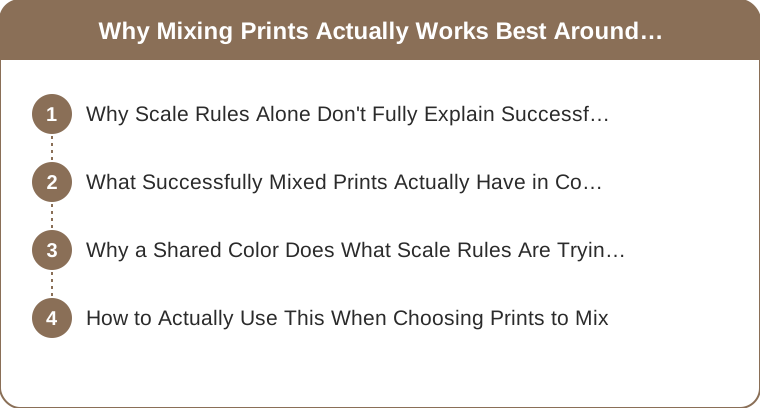
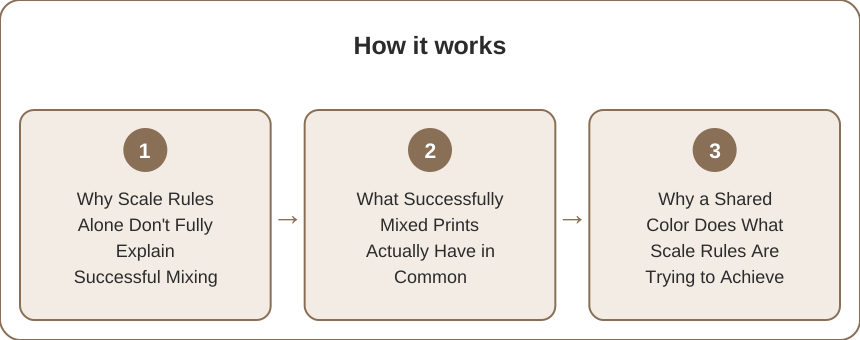
Why Scale Rules Alone Don’t Fully Explain Successful Mixing
The gap: plenty of large-print-with-small-print combinations still looking chaotic and accidental despite following the standard scale advice, which means scale by itself isn’t the actual mechanism making mixed prints read as intentional.
What Successfully Mixed Prints Actually Have in Common
The real pattern: examining outfits where mixed prints genuinely work almost always revealing at least one shared color appearing in both prints, a common thread the eye picks up on that ties the two patterns together even though their scale and shapes differ.

Why a Shared Color Does What Scale Rules Are Trying to Achieve
The mechanism: a shared anchor color giving the eye a single element to track across both prints, creating a sense of cohesion, while scale variation alone gives the eye nothing to connect the two patterns to each other.
How to Actually Use This When Choosing Prints to Mix
The practical approach: picking two prints that share at least one similar color tone, even a muted, secondary color rather than the dominant one, before worrying about matching their pattern scale, and the frame (a shared anchor color, not pattern scale, is the actual mechanism that makes mixed prints read as intentional — checking for a shared color first is more reliable than the standard large-small scale rule.)
Mixing prints gets explained mostly through rules about pattern scale, pair a large print with a small one, but plenty of large-print-with-small-print combinations still look chaotic despite following that advice, which means scale alone isn’t the actual mechanism, and examining outfits where mixed prints genuinely work almost always reveals at least one shared color appearing in both prints, a common thread the eye picks up on that ties the patterns together even though their scale and shapes differ. A shared anchor color gives the eye a single element to track across both prints, creating cohesion, while scale variation alone gives the eye nothing to connect the two patterns to each other, so picking two prints that share at least one similar color tone, even a muted, secondary color rather than the dominant one, before worrying about matching pattern scale, is a more reliable rule than the standard large-small scale advice.
Keep Reading
This article is for general styling and informational purposes only. Trends, sizing, availability and pricing may vary by brand and season.