The Art of Mixing and Matching Your Wardrobe
Some women pull endless outfits from a closet that isn’t actually that big, and somehow never look like they’re repeating themselves. It’s not a bigger wardrobe — it’s a skill, and it’s one you can learn in an afternoon.
Quick Answer: Mixing and matching means learning which pieces pair well by color, proportion, and texture, then building outfits around a handful of versatile “hero” pieces you already own. Master a few reliable formulas and you can create 20-30 fresh outfits from as few as 10-12 core items.

Why should you shop your own closet first?
Before you buy anything new, spend 15 minutes trying combinations you’ve never actually put together. Pair pieces you’ve never worn side by side, tuck in what you usually wear loose, layer a shirt under a dress instead of over it. Most closets have 2-3x more usable outfits hiding in them than people realize — you just haven’t tried the combination yet.
A few quick experiments to try tonight:
- Tuck a top you always wear untucked
- Layer a button-down under a sweater instead of a jacket
- Belt a dress you’ve only ever worn loose
- Swap your usual shoe pairing for something unexpected

What actually makes two pieces “go together”?
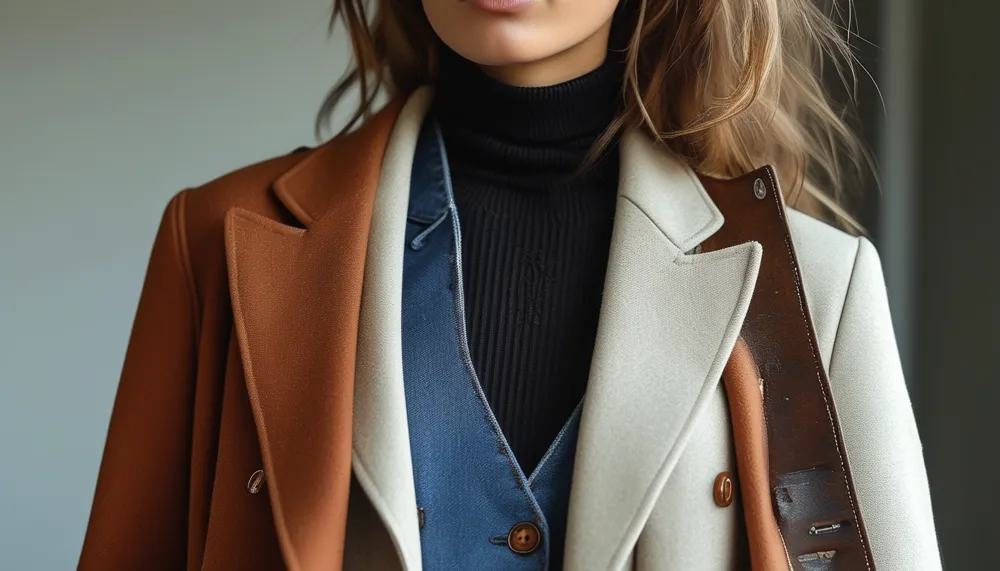
Three things, mainly: color, proportion, and texture. Color pairing means sticking to a palette or using one true contrast color at a time — think navy and cream, not five competing brights. Proportion means balancing volume: a fitted top with wide-leg trousers, or an oversized sweater with a slim skirt, so you’re not swimming in shape from head to toe. Texture pairing — a chunky knit against a sleek satin skirt, for instance — is the detail that makes an outfit look considered instead of accidental.

Which pieces should you build outfits around?
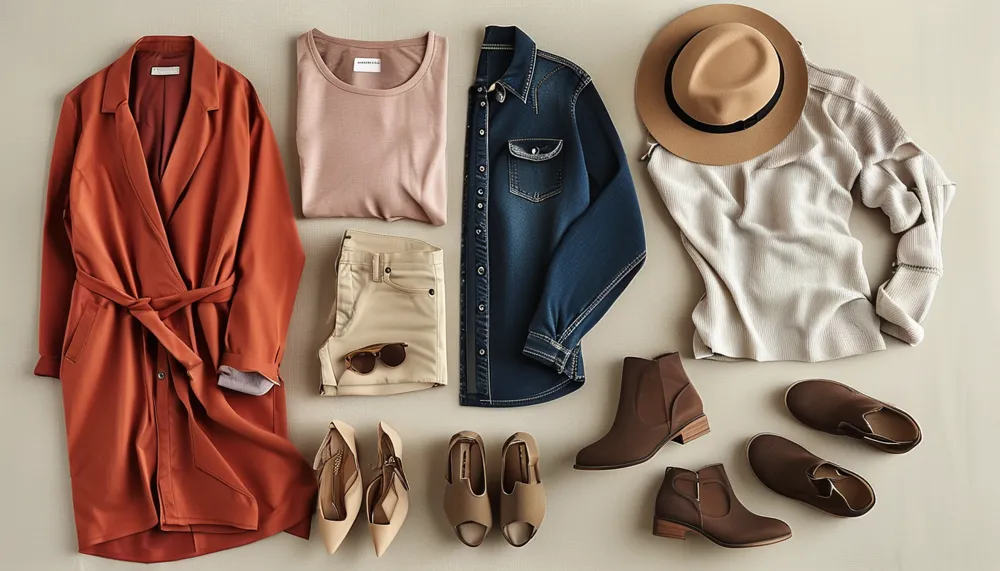
Look for your “hero” pieces — the ones that seem to work with almost everything you own: a crisp white shirt, dark straight-leg jeans, a well-cut blazer, a neutral fine-knit sweater. These four or five items act as connectors, and a wardrobe built around 4-6 solid heroes can generate dozens of outfits with everything else rotating around them. If you’re only going to invest in a few “good” pieces, invest here first.
A quick way to spot your own hero pieces: think back over the last month and notice what you reached for again and again without even thinking about it. That item — whether it’s a specific cardigan or a pair of trousers — is already doing hero-piece work in your wardrobe, whether you’ve noticed or not.
What’s a fast way to build reliable outfit formulas?
Keep 3-4 go-to formulas in your back pocket so you’re never starting from zero: trousers plus a tucked knit, a slip dress plus a blazer, jeans plus a silky top and flats. From each formula, swapping just one piece — a different shoe, a different colored top — creates a genuinely new-feeling outfit in under 2 minutes. This is the trick behind people who “always look put together” without obviously trying hard.
Myth vs Fact: mixing and matching edition
- Myth: You need a huge wardrobe to mix and match well. Fact: A tight capsule of 10-15 well-chosen pieces often produces more usable outfits than a packed closet full of one-off buys.
- Myth: Patterns and prints never mix. Fact: Two prints in the same color family (say, two blues) can work fine — it’s clashing color families, not clashing patterns, that usually looks off.
- Myth: Mixing and matching is only for people with natural style instincts. Fact: It’s a learnable formula — color, proportion, texture, hero pieces — not an innate talent.
FAQ
How many pieces do I actually need to mix and match well?
You can get surprisingly far with 10-15 versatile pieces — a few bottoms, a few tops, one or two layers, and 2-3 pairs of shoes. Quality and versatility matter far more than quantity.
What’s the easiest mistake to avoid when mixing patterns?
Stick to one dominant pattern per outfit and let everything else be solid. Two bold, competing patterns (florals plus stripes, for example) is the fastest way to make an otherwise good outfit feel chaotic.
How do I know if two colors actually go together?
When in doubt, pair anything with navy, white, black, or beige — these four neutrals work with almost every other color, so building outfits around them takes the guesswork out of color pairing.
What if I’ve genuinely worn every combination in my closet already?
That’s usually a sign to add one new connector piece rather than a whole new outfit — a single new cardigan or shoe style, layered into your existing formulas, can unlock 5-10 fresh combinations on its own without a big shopping trip.
TL;DR:
- Try new combinations from your existing closet before buying anything new.
- Pair pieces by color, proportion, and texture for outfits that look intentional.
- Build your wardrobe around 4-6 versatile “hero” pieces.
- Keep 3-4 reliable outfit formulas ready to swap one piece at a time.
- A tight, well-chosen 10-15 piece wardrobe often beats a packed closet.
- Mixing and matching is a learnable skill, not a natural talent.
Keep Reading
This article is for general styling and informational purposes only. Trends, sizing, availability and pricing may vary by brand and season.